
What Is Conversion Rate Optimization (CRO)?
Conversion Rate Optimization (CRO) is the process of improving a website or digital experience to increase the percentage of visitors who complete a desired action, such as making a purchase, signing up for a newsletter, or filling out a contact form. CRO helps businesses get more value from existing traffic by improving user experience and reducing friction.

KEY BREAKDOWNS
Conversion Rate Optimization (CRO) increases the percentage of visitors who take a desired action, like buying a product, signing up, or submitting a form.
It improves website elements such as design, messaging, forms, and calls-to-action to guide visitors effectively.
CRO is data-driven, using analytics and testing rather than guesswork to make smarter decisions.
Small changes can make a big difference, boosting leads, sales, or sign-ups without needing more traffic.
CRO helps businesses get more value from existing visitors, maximizing the return on marketing efforts.
Testing methods like A/B testing are key, helping find the best-performing variations.
What Conversion Rate Optimization (CRO) Means
Conversion Rate Optimization, often called CRO, focuses on turning more website visitors into customers or leads. A conversion occurs when a visitor completes a specific action that benefits the business.
Examples of conversions include submitting a contact form, downloading a guide, signing up for a free trial, or making a purchase. The conversion rate is the percentage of visitors who complete that action.
CRO aims to increase this percentage by improving how users interact with a website or landing page.
Why Conversion Rate Optimization Is Important
Many businesses invest heavily in driving traffic to their websites through SEO, advertising, and social media. However, traffic alone does not guarantee results.
If visitors arrive on a website but leave without taking action, marketing investments are wasted. CRO focuses on improving the effectiveness of that traffic.
By optimizing the user experience and conversion paths, businesses can generate more leads and revenue without increasing their marketing budget.
Key Areas CRO Focuses On
Conversion Rate Optimization evaluates several parts of the website experience. These include page layout, design, messaging, calls to action, and form usability.
For example, a confusing navigation menu or long sign-up form may discourage visitors from completing an action. CRO identifies these obstacles and removes them.
Other improvements might include clearer headlines, stronger value propositions, faster page load times, and more visible call-to-action buttons.
The Role of Data and Testing
CRO is a data-driven process. Instead of guessing what will improve performance, marketers use analytics tools and user behavior data to guide decisions.
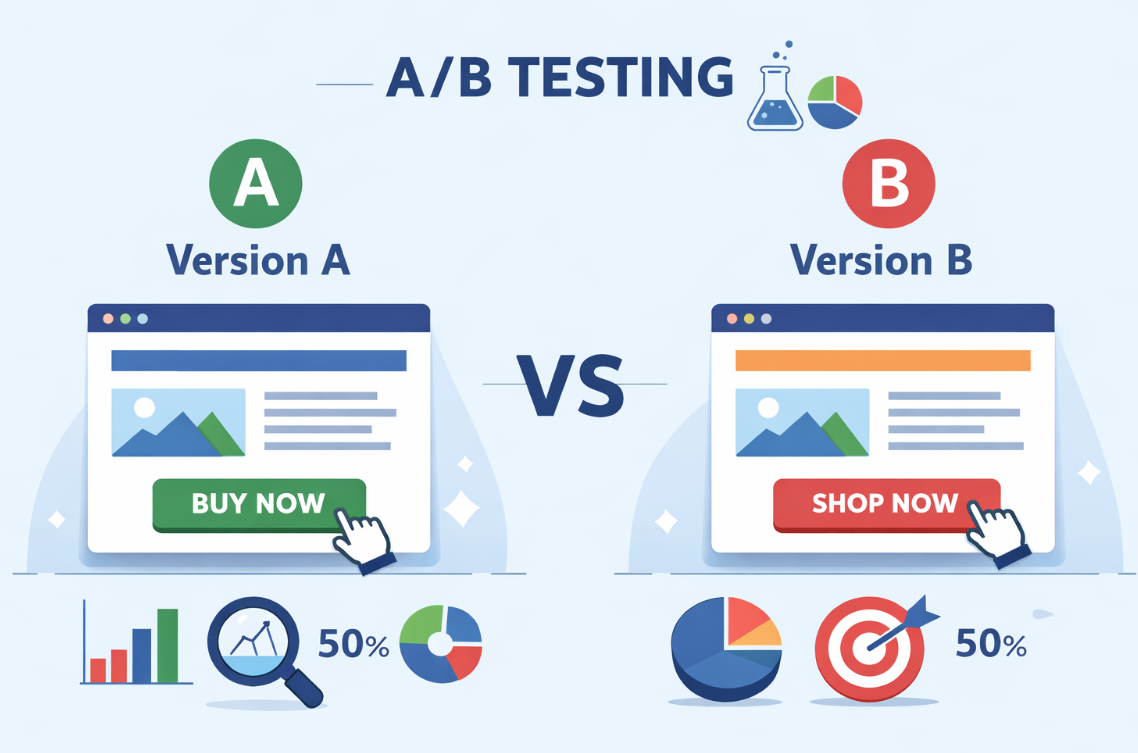
Common CRO methods include A/B testing, where two versions of a webpage are compared to see which one performs better. Businesses may test different headlines, images, page layouts, or call-to-action buttons.
These experiments help identify the changes that lead to higher conversions and better user engagement.
CRO as a Continuous Improvement Process
Conversion Rate Optimization is not a one-time activity. User behavior, market trends, and customer expectations change over time.
Successful businesses continuously monitor performance and test new improvements. Even small adjustments can lead to meaningful increases in conversions.
Over time, this ongoing optimization can significantly improve the return on investment from digital marketing efforts.
Practical Applications
Improving a Contact Form
Problem: A consulting company noticed that while many visitors reached their contact page, only a small percentage were submitting the form, limiting potential leads.
Solution: Using conversion rate optimization (CRO) techniques, the company analyzed user behavior and simplified the contact form by reducing required fields, improving layout, and making the form easier to complete.
Results: These small changes led to a significant increase in form submissions, resulting in more qualified leads and higher engagement from prospective clients.
Optimizing an E-commerce Checkout
Problem: An online retailer was experiencing a high cart abandonment rate, with many customers leaving during the checkout process.
Solution: Through CRO analysis, the company identified that too many steps were required to complete a purchase. By streamlining the checkout process, adding a guest checkout option, and simplifying navigation, the retailer made it easier for customers to finalize orders.
Results: Completed purchases increased noticeably, improving overall sales revenue and enhancing the customer shopping experience.
Testing Landing Page Headlines
Problem: A startup promoting a new software tool was driving traffic to a landing page through online ads but struggled with low sign-up rates.
Solution: The company applied A/B testing as part of its conversion rate optimization strategy, comparing two different headlines to see which version clearly communicated the product’s value and encouraged users to act.
Results: The winning headline led to more sign-ups, boosting overall conversion rates and maximizing the return on advertising spend.
Quick Takeaways
-
A good conversion rate varies depending on the industry and type of business. Many websites see conversion rates between 2% and 5%, but well-optimized pages can achieve higher rates.
-
Businesses track different conversions depending on their goals. Common examples include purchases, contact form submissions, email sign-ups, demo requests, and downloads of resources.
-
Conversion rate is calculated by dividing the number of conversions by the total number of visitors and multiplying by 100. For example, if 1000 people visit a website and 50 make a purchase, the conversion rate is 5%.
-
Businesses use analytics platforms, heatmap tools, and testing software to analyze user behavior and run experiments. These tools help identify areas where visitors drop off or experience friction.
-
Some improvements can show results quickly, especially when tested on high-traffic pages. However, CRO is an ongoing process that benefits from continuous testing and refinement over time.
Beyond the Surface: The Riseomar Breakdown

Feeling like your website traffic is ghosting you?
If visitors are coming but no one’s buying, signing up, or even saying hi, it might be time for a complimentary marketing audit. We’ll peek under the hood of your website, check your conversion paths, and spot the small tweaks that could turn casual browsers into loyal customers. Who knows—your next lead (or sale) might be just a click away.
Get Your Complimentary Audit
Not sure where to begin? Your business deserves more than a handful of likes and your aunt’s ‘💯’ in the comments. Get real visibility, attract actual leads, and stop throwing money at marketing that’s just a shot in the dark. Start with a complimentary digital marketing audit and we’ll show you what your website, SEO, and ads are really doing.